Reusable Launch-Vehicle Reliability Growth and Turnaround Maintenance Study
A reproducible aerospace study of how reusable-vehicle architecture, inspection, corrective work, fleet learning and resource constraints shape verified turnaround and reliability evidence.
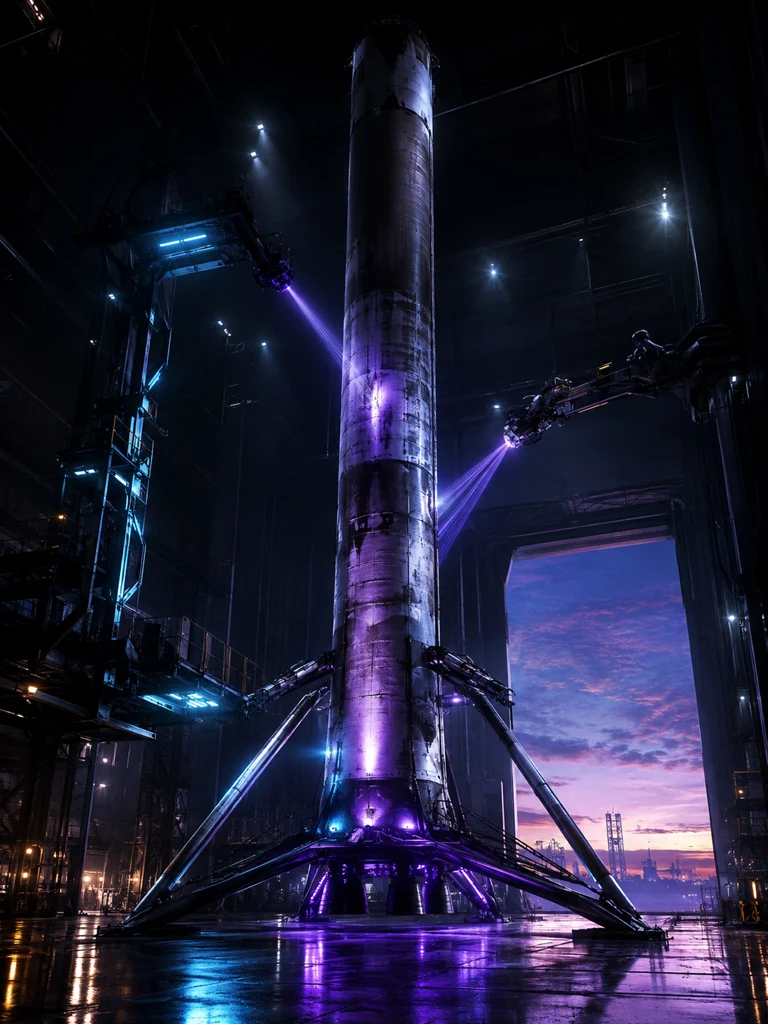
Project definition
Problem statement
A reusable stage can land successfully and still require extensive inspection, corrective work, transport, servicing and verification before it is ready to fly again.
The engineering problem is to compare reliability and turnaround evidence without converting incomplete public statements into precise operator statistics.
Project objectives
- Compare eight reusable launch-vehicle architecture archetypes on a common evidence boundary.
- Separate mission reliability, propulsion reuse, thermal protection, recovery, inspection, maintenance, ground support and logistics.
- Explain Duane and Crow-AMSAA reliability-growth methods and their data requirements.
- Evaluate balanced, assurance, cadence and lifecycle-cost priorities.
- Quantify screening uncertainty and identify the most important validation gaps.
Project structure
Project components
Architecture register
Stores eight generic reusable-vehicle architectures and twelve traceable evidence dimensions.
Operational-risk model
Evaluates mission, propulsion, thermal-protection, recovery, processing and logistics risks with hard gates.
Turnaround framework
Separates recovery, safing, inspection, scheduled work, corrective work, verification and readiness.
Reliability-growth study
Explains compatible exposure, configuration control, Crow-AMSAA interpretation and common model limitations.
Uncertainty analysis
Runs fixed-seed bounded sampling and one-at-a-time sensitivity across the evidence register.
Assurance pipeline
Produces validation criteria, workflow FMEA cells, an assurance crosswalk and release checks.
Methodology
Project workflow
- 01Define the boundary
Select the vehicle stage, mission-success definition, exposure unit, recovery mode and turnaround clock.
- 02Review the evidence
Trace public NASA, FAA, ISRO and reliability-method sources through the annotated source matrix.
- 03Run the full matrix
Calculate all 768 architecture, risk, context and evidence combinations.
- 04Test decision priorities
Compare balanced, assurance, cadence and lifecycle-cost scenarios.
- 05Review uncertainty
Inspect percentile intervals, gate outcomes, sensitivity and validation gaps.
- 06Defend the result
Explain what the model supports, what it cannot claim and what operational data would be needed next.
Demonstration scenario
The student compares eight architecture archetypes under the same public-evidence framework. The reusable first-stage with expendable upper stage retains the highest balanced position, while the historical winged orbital architecture is penalized by inspection and support burden. The result is explained as a model-relative evidence position, not an operator performance claim.
Engineering
Tools and method
- Tools
- The project uses Python 3.12, NumPy, pandas, Matplotlib, python-docx for subject analysis, simulation, and results.
- Evidence model
- Python records retain every architecture position, scenario weight, gate and evidence boundary.
- Analysis
- NumPy and pandas generate deterministic cases, uncertainty summaries, FMEA tables and scenario comparisons.
- Visualisation
- Matplotlib produces twelve labelled figures from retained CSV results.
- Documentation
- The package includes a 96-page report, a 16-page guide, 60 annotated references and a NASA literature image.
- Verification
- Ten tests, Ruff, dependency audit, repository validation, page-by-page document review and a clean Docker run support the release.
Testing
Evaluation
Evaluation measures
- Architecture evidence score and harmonic readiness
- Operational-risk applicability and hard-gate pass rate
- Balanced, assurance, cadence and lifecycle-cost scenario positions
- Fifth, median and ninety-fifth percentile uncertainty results
- Severity-weighted validation gaps and highest workflow FMEA risks
- Sensitivity of readiness to each evidence dimension
Project boundaries
- Evidence positions are ordinal screening inputs, not measured fleet statistics.
- The reliability-growth discussion is not fitted to confidential or operator-specific anomaly data.
- The project is not a safety case, maintenance instruction, licensing submission or flight authorization.
- Operational use requires controlled mission, anomaly, inspection, work-order, configuration and resource data with qualified independent review.
Included
- 01Complete Python source code and declared architecture evidence positions
- 02768 architecture, risk, context and evidence cases
- 0320,000 fixed-seed uncertainty draws per architecture
- 04Reliability-growth methodology, validation criteria and workflow FMEA
- 05Twelve labelled engineering figures and complete CSV results
- 0660 annotated references and one attributed NASA literature image
- 0796-page project report in PDF and editable Word formats
- 0816-page setup and usage guide in PDF and editable Word formats
- 09Ten automated tests, repository validation and Docker workflow
Project record
No information is collected on this page.
- Permanent project ID
- GP-AE-1X5BWEF
- Catalogued
- 21 Aug 2026
- Completed
- 04 Sept 2026
- Verified
- 04 Sept 2026
- Demonstration
- Included in repository
Handover
After purchase
- 01Payment is confirmed
The project is marked unavailable and cannot be purchased again.
- 02Repository access is granted
The buyer's submitted GitHub account receives access to the private repository.
- 03The purchase record is delivered
The certification sheet is prepared from the reviewed buyer details and sent privately by email.